ADAS calibration and Porsche coding: precision above all
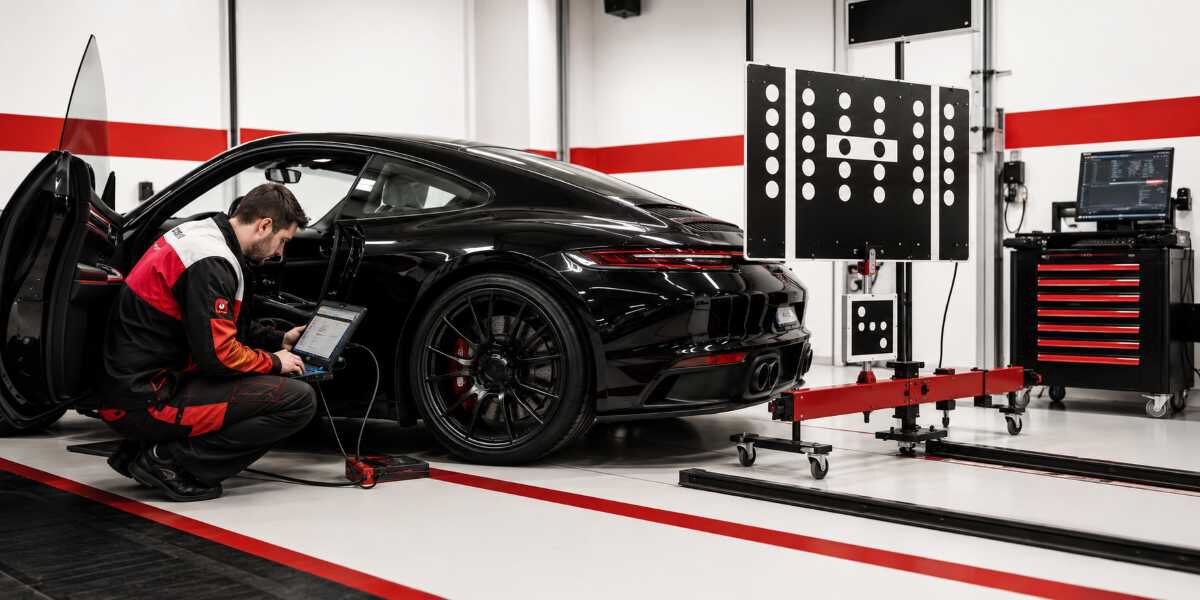
Imagine you are driving a Porsche, and suddenly the autopilot brakes when it shouldn’t. Or the emergency braking system reacts too late. Sometimes an IMMO error appears on the dashboard, and the engine simply becomes immobilized. Drivers often assume it’s a mechanical issue. In reality, the problem is almost always electronic. A modern car is a network of sensors working together. If even one of them is misaligned, the entire system is affected. After windshield replacement or even a minor accident, cameras can shift by millimeters. As a result, adaptive cruise control (ACC) stops maintaining proper distance, and the lane monitoring system (FCW) may misinterpret road markings. At PRO.CTO, we see this every day. We don’t just clear errors — we restore the vehicle to factory specifications.
When Porsche electronics require intervention: key scenarios and coding stages
The process of coding and calibration is never universal. Each Porsche model has its own nuances in control unit firmware. This is especially critical when working with IMMO (immobilizer), where the key is linked to a specific engine and transmission control unit. It is also important to understand the difference between adapting new components and deep control unit programming. We take a comprehensive approach, starting with reading original fault codes via a diagnostic interface. Our service is located at 3 Street 17, Al Quoz Industrial Area 4, Dubai, and Porsche vehicles come to us from across the country. Here is how we structure our work:
1. Initial computer diagnostics of all safety-related control units. We verify firmware versions and compare them with reference databases to determine whether any prior modifications have been made.
2. Restoration of ADAS calibration parameters. This includes precise alignment of radar and camera systems relative to the vehicle axis. We use laser alignment equipment to ensure accuracy.
3. Coding of a new IMMO unit in case of lost keys or engine control unit replacement. We reprogram data via the OBD port without removing components from the vehicle.
4. Adaptation of the EBD system (electronic brake force distribution). After replacing brake discs or pressure sensors, we update the calibration values in the ABS module.
5. Adjustment of FCW (forward collision warning) parameters. We fine-tune system sensitivity based on driving style and tire specifications.
6. Final road testing with ACC validation. This is a mandatory step, as static testing does not always reflect real-world driving conditions.
Each of these stages requires professional equipment and extensive experience. That is why we never skip steps, even if it takes more time.
Signs of malfunction: how to recognize when the system needs repair
Drivers often report typical issues. Adaptive cruise control may brake abruptly on an empty road. Or the lane assist system may pull the steering wheel to one side even when the wheels are properly aligned. These are direct consequences of incorrect ADAS calibration. This becomes especially critical after windshield replacement, where the stereo camera is mounted. Without proper alignment, FCW may fail to respond at a crucial moment. We also frequently service Porsche vehicles after battery discharge, when ACC settings are reset. The car may begin to move unevenly or with noticeable hesitation. IMMO issues tend to appear unexpectedly: the key is no longer recognized, or engine start is blocked. Sometimes clients report EBD errors, which can lead to uneven brake pad wear. The best way to avoid dangerous situations is regular diagnostics. However, many drivers ignore these symptoms until the situation becomes critical. If you notice anything similar, call us at +971 50 104 8222 — we will inspect your vehicle.
How we work at PRO.CTO: from booking to road testing
Everything starts with a call or message. We discuss the symptoms and estimate the scope of work. Upon arrival, we connect original diagnostic equipment and retrieve data from the control units. This typically takes 30–40 minutes. We then prepare a detailed report and propose a plan of action. ADAS calibration takes approximately 2–3 hours, including workshop measurements and on-road ACC adaptation. IMMO or EBD coding typically requires 1–2 hours. We do not require prepayment — you pay after the work is completed. Once finished, we always test the vehicle together with you to ensure all systems are functioning correctly. We use only original software adapted to your VIN. No “universal” firmware — this guarantees stable and reliable operation of safety systems for years to come.

 UAE
 RU
