Why your Bentley won't start: starter diagnostics and replacement
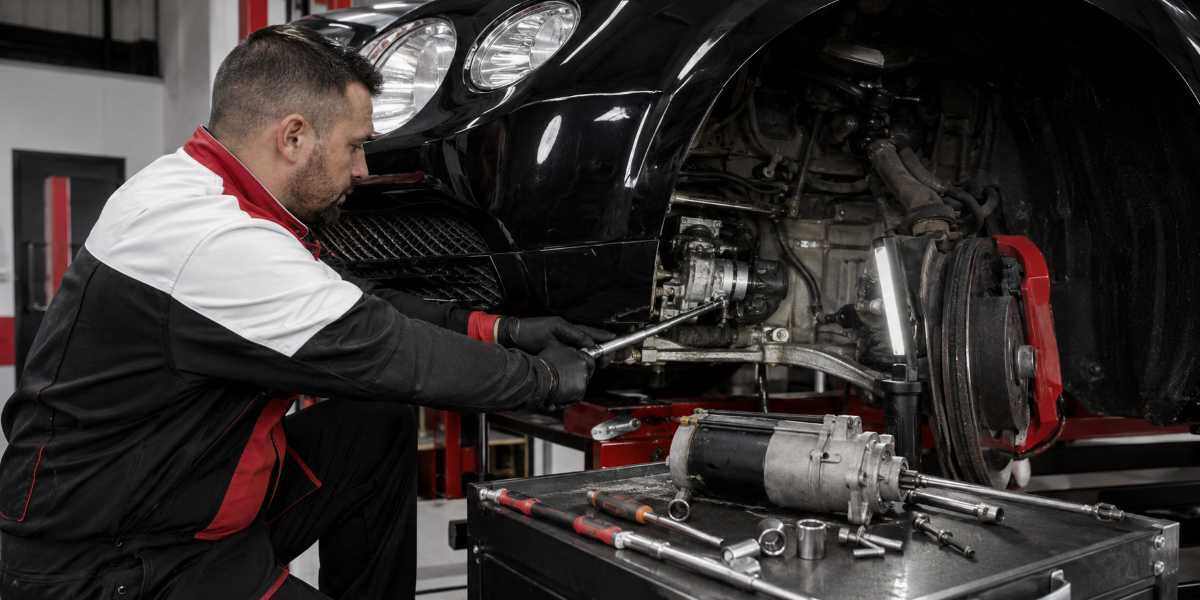
Every Bentley owner appreciates what a premium engine should be: quiet, powerful, and flawlessly refined. But one morning, you turn the key or press the start button and are met with either complete silence or an unpleasant clicking sound. The dashboard lights up, yet the engine remains unresponsive. In most cases, the cause is a relatively small component that can ruin your entire day: the starter motor. In Dubai's extreme heat, this unit operates under exceptionally demanding conditions. If you encounter this situation, there's no need to panic. At PRO.CTO, we know how to get your vehicle back on the road quickly. Our workshop is located in Al Quoz Industrial Area 4, and our extensive experience with British luxury vehicles allows us to resolve the issue efficiently and without unnecessary stress. Workshop address: 3 Street 17, Al Quoz Industrial Area 4, Dubai.
How we replace a Bentley starter: the professional process
Replacing a starter motor is far more complex than simply removing a couple of bolts and installing a new part. Bentley vehicles are engineered with a much more sophisticated layout. Access to the starter is often obstructed by the cooling system or the exhaust manifold. That is why we follow a precise engineering procedure. Every step must be performed accurately to avoid damaging surrounding components. This is how the process is carried out at our service center.
1. Initial computer diagnostics and battery inspection. We always begin with the electrical system. A weak battery can easily mimic the symptoms of a faulty starter. We test battery voltage and inspect all electrical connections to eliminate false diagnoses. Only then do we assess the condition of the starter solenoid.
2. Removal of protective covers and the air intake duct. This is often the most time-consuming stage of the job. In models such as the Bentley Continental GT and Flying Spur, the engine bay is extremely compact. We carefully create access to the starter without damaging plastic fasteners or rubber seals.
3. Disconnecting the battery terminals and removing the electrical connections from the solenoid. Safety always comes first. We disconnect the negative battery terminal to eliminate the risk of a short circuit. After that, we carefully disconnect both the control wire and the main power cable from the starter.
4. Removing the starter mounting bolts. This step frequently requires specialized swivel sockets. Due to prolonged exposure to engine heat, the bolts may become seized. We use professional penetrating lubricants to remove the assembly without damaging the threads.
5. Removing the starter through the service opening and inspecting the flywheel. This is a critical part of the inspection process. While the starter is removed, we examine the flywheel teeth for wear. If they are damaged, even a brand-new starter will fail prematurely. We always inform our customers about such findings before proceeding.
6. Installing a new or professionally reconditioned starter. We recommend genuine components or premium-quality Bosch alternatives. If budget is a concern, we can refurbish the original starter by replacing the bushings and brushes, although this option comes with a more limited warranty.
7. Reassembly and torque verification. Every fastener is tightened using a calibrated torque wrench according to factory specifications. Insufficient torque can lead to vibration, while excessive torque may cause deformation of the engine block.
The entire procedure typically takes around two to three hours. Once the installation is complete, we clear any fault codes stored in the electronic control units and verify the operation of the start-stop system. If you have any questions or would like to receive a quotation, please contact us at +971 50 104 8222.
When the starter begins to fail: warning signs
A starter motor rarely fails without warning. In most cases, it provides noticeable symptoms days or even weeks before complete failure. Pay close attention to the sound during engine start-up. If you hear a metallic grinding noise or repeated clicking while the engine does not crank, this is a strong indication of a worn starter solenoid. Another common symptom is slow engine cranking. The starter appears to struggle, turning the engine sluggishly despite a fully charged battery. Sometimes, turning the key produces only a single, distinct click, after which nothing happens. This usually indicates that the starter drive has engaged the flywheel but lacks sufficient power to rotate it. You should also be alert to the smell of burnt plastic after attempting to start the vehicle. This often indicates a short circuit within the starter windings. In some cases, the problem is not mechanical but electrical. Oxidized contacts on the solenoid can create excessive electrical resistance, preventing sufficient current from reaching the starter motor. In such situations, cleaning the terminals may resolve the issue. However, under Dubai's high temperatures, overheating and worn starter bushings remain the most common causes of failure. As the bushings wear, the rotor begins to contact the stator, leading to internal damage. This type of repair should always be performed by a certified service center, as improper replacement can damage the engine's starter drive mechanism.
Bentley service at PRO.CTO: precision and guaranteed results
When you arrive at our Al Quoz workshop, we begin with a detailed conversation. Our technician carefully listens to your observations, as the sound produced during engine start-up often provides valuable diagnostic information. Your vehicle is then positioned on a lift, and before any disassembly begins, we disconnect the battery as part of our standard safety procedure. We never rush this type of work because unnecessary haste often results in damaged fasteners and avoidable complications. The repair time depends on the specific Bentley model. For example, the Bentayga provides easier access to the starter from underneath the vehicle, while the Continental GT requires partial removal of the intake system. In most cases, the replacement is completed within two to three hours, provided the required part is in stock. If your vehicle is brought in for diagnostics, we always contact you before beginning any disassembly to review and approve the repair estimate. Occasionally, the starter proves to be fully operational, and the actual fault lies in the immobilizer or ignition switch. We believe in complete transparency throughout the repair process. Because our workshop specializes in premium vehicles, we have access to genuine parts catalogs and manufacturer-level diagnostic software. Once the repair is completed, we provide a comprehensive warranty covering all work performed. During the hottest months of the year, we also regularly offer complimentary express inspections of the starting system, giving you added confidence before driving around the city.

 UAE
 RU
